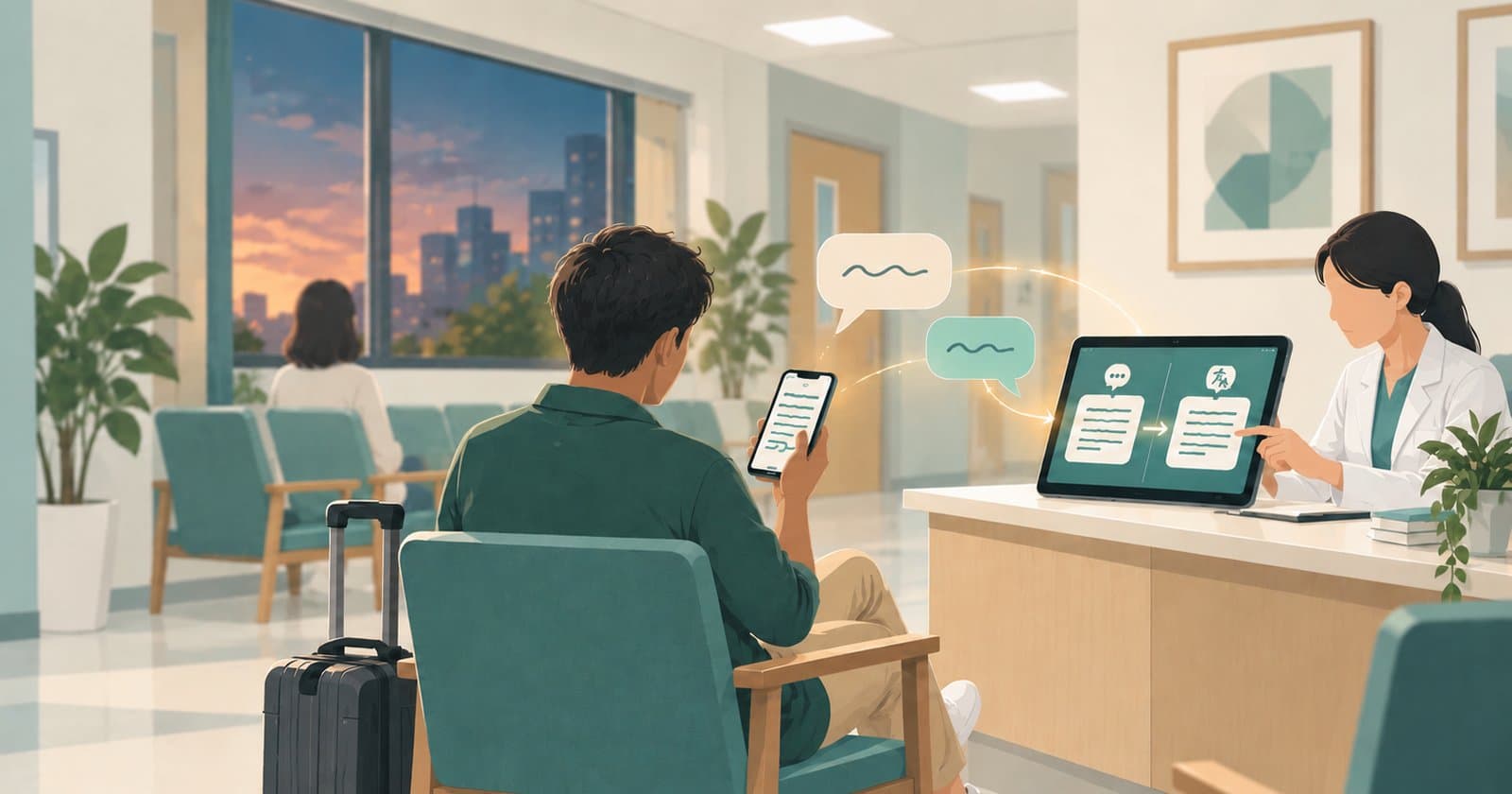
A Spanish-speaking visitor from South America, in Taiwan on business, filled out his Brief in Spanish before walking into clinic. One tap later the doctor was reading it in Chinese — and not a word of what the patient wrote had been changed. How iRehab Brief handles language: a human-reviewed multilingual question bank, translation the doctor chooses to run, and the patient's own words always kept — plus the things we deliberately don't do.
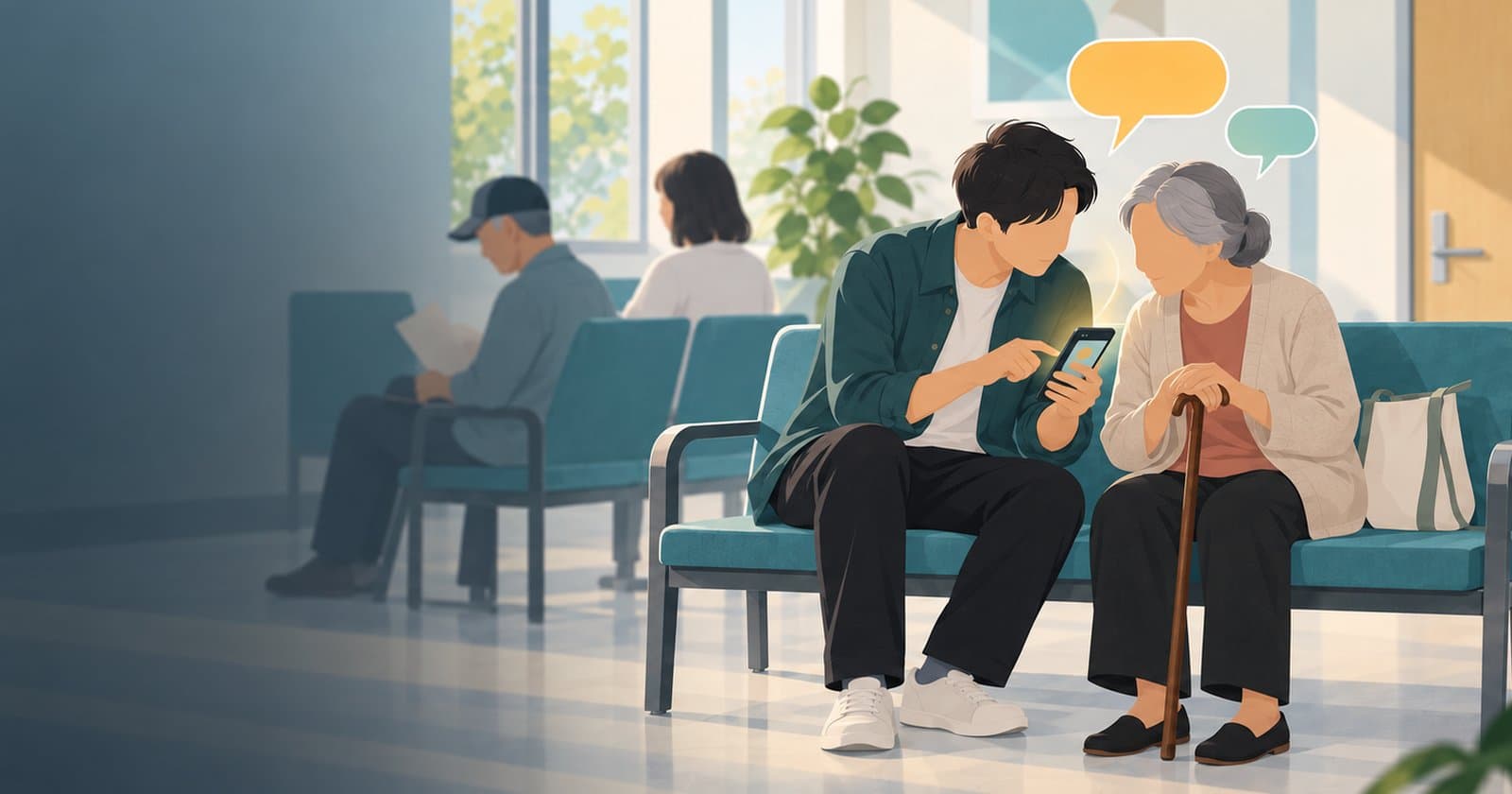
Brief was built to solve a doctor's problem: let patients say what matters most, in their own words, before the visit. But in clinic we kept seeing the same scene: the one holding the phone was a grandchild who had come with an older patient. This piece is about what that scene made us rethink, and where Brief goes next.
Daily operations manual for front-desk and clinic assistant staff: pre-clinic checks, helping elderly patients and foreign caregivers, rescuing stuck forms, four doctor-collaboration scenarios, and six common questions.
The doctor's guide to iRehab's Brief feature — printing the QR poster, reading the Brief queue, choosing the right closing option, recovering a missed record with the confirmation code, and six FAQs. Why we built it: so more of your time goes to the patient, not the keyboard.
You walked into the clinic and saw a QR Code poster, but you're not sure what to do. This guide walks you through the 2-3 minute Brief, why your confirmation code matters, and what to do if scanning or filling goes wrong. You're not filling it to add paperwork — you're filling it so the doctor can spend more time with you.