In a recent morning conference at a regional hospital, a senior attending physician asked us: 'Isn't design thinking outdated by now?' We hear that question more than once a year in the medtech space. Our answer: design thinking didn't fail in the last decade — it just ran too slowly. AI compresses the prototype-and-feedback loop from months to days, which is what design thinking has been quietly waiting for. This piece walks through our recent internal pivot — from a single-specialty pilot to a cross-specialty schema composer — to show why AI is not the replacement for design thinking. It's the tool design thinking has been waiting twenty years for.
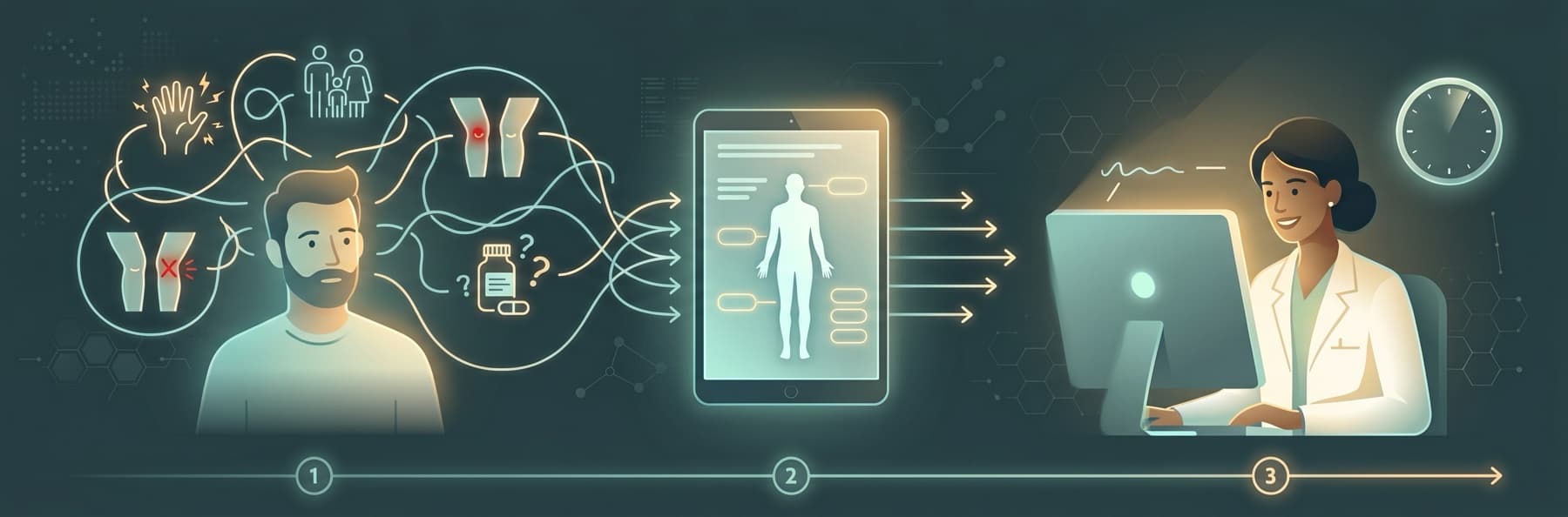
Most clinical AI demos feature the tidy post-op patient with weeks of longitudinal data. The clinic-reality majority are first visits: no history in the system, a single verbal complaint, and roughly 60–70% with no surgical need. This post is about what iRehab calls the pre-visit Brief — the short, structured summary that lands on the physician's screen before the patient sits down — and why its central design constraint is that the patient cannot answer 'is it tendon or nerve?'
Most medical AI is heading toward end-to-end automation. iRehab goes the other way. Physicians don't need AI to finish their paperwork — they need it to translate two weeks of patient-reported data into a specialty-relevant summary in the two minutes before the patient sits down. Draft-Only Enforcement is the guardrail that keeps the translator honest.
iRehab doesn't embed AI in the app. It lets patients bring their own AI to understand their rehab progress. Why? Because the family is the unit of recovery, and AI's value isn't diagnosis — it's translation.
iRehab Doctor AI Phase 2 lets AI draft clinical assessments, but never auto-publish. Why we chose draft-only enforcement over full autonomy, and what it means for the future of AI in orthopedic practice.
GPT lets anyone build a SaaS in a weekend. When software is no longer scarce, where does value migrate? To data — but not just any data. Data that others cannot replicate. Tissue force data from implantable sensors is that kind of data. This article explains why thin software dies, thick software thrives, and where sensors fit in the game.
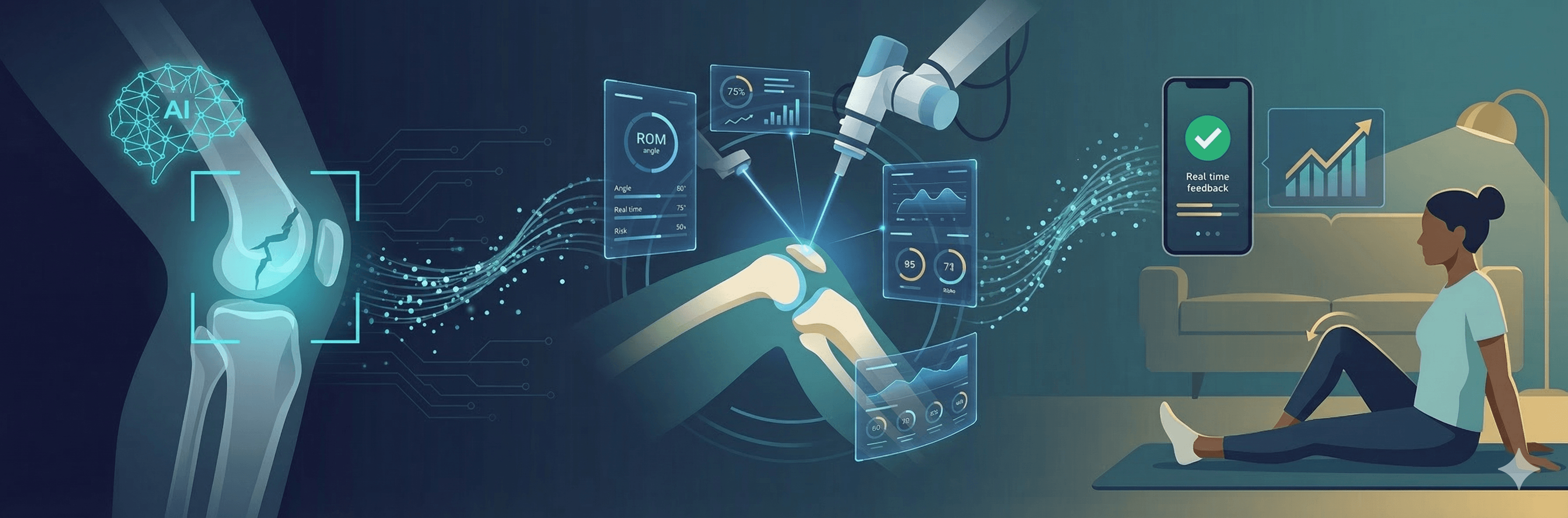
In 2025, the FDA cleared a record 295 AI medical devices. Fracture detection hits 98% accuracy. ML models predict TKA dissatisfaction before surgery (AUC 0.888). But the real AI battleground in orthopedics isn't the operating room — it's the 90 days after discharge.